

Little Explorer: Around 9 to 12 Months
ENDS 12 OCT 2026 11.59 AEST.






Somewhere around 9 months, smaller pieces become easier to pick up, and everything at the table becomes interesting.
Your baby may want to grab it, lift it, push it and find out what happens when it falls. They’re not trying to make mealtimes difficult. They’re exploring what their hands can do and what happens next.
Ages are guides, not deadlines. If your baby is closer to 6 months and beginning first tastes, visit our Starting Solids collection instead.
What’s happening at this stage
The pincer grip is beginning to develop, helping your baby pick up smaller pieces between their thumb and finger.
They may also want to hold a spoon, dip it into food or attempt their first loading movements. The result probably won’t look like a neat adult scoop yet, but the practice still matters.
Lifting, pushing and dropping may become a regular part of mealtimes too. Cause-and-effect exploration is common at this age, although not every dropped spoon or plate has exactly the same reason behind it.
What you may notice
- picking up smaller pieces with their thumb and finger
- reaching for or trying to hold the spoon
- dipping or pushing the spoon through food
- lifting, pushing or dropping tableware
- open-cup practice with support
- wanting more involvement in feeding themselves
What helps now
Offer food on a broad, easy-to-reach surface and give your baby time to pick up smaller pieces.
Let them hold a spoon and try loading it, without expecting tidy scooping just yet.
If tableware is repeatedly dropped, keep your response calm and predictable. Use one simple boundary, then bring the focus back to eating.
Keep serves manageable, with more available when needed.
Set them up for easier reaching
Seat your baby upright and close to the eating surface, with the tray or table around elbow height.
Their feet should rest firmly on a stable footrest instead of dangling. Adjust the seat and footrest as they grow so they don’t need to lean forward or reach up towards food.
When the setup fits their body, they have more freedom to use their hands for picking up food and practising with a spoon.
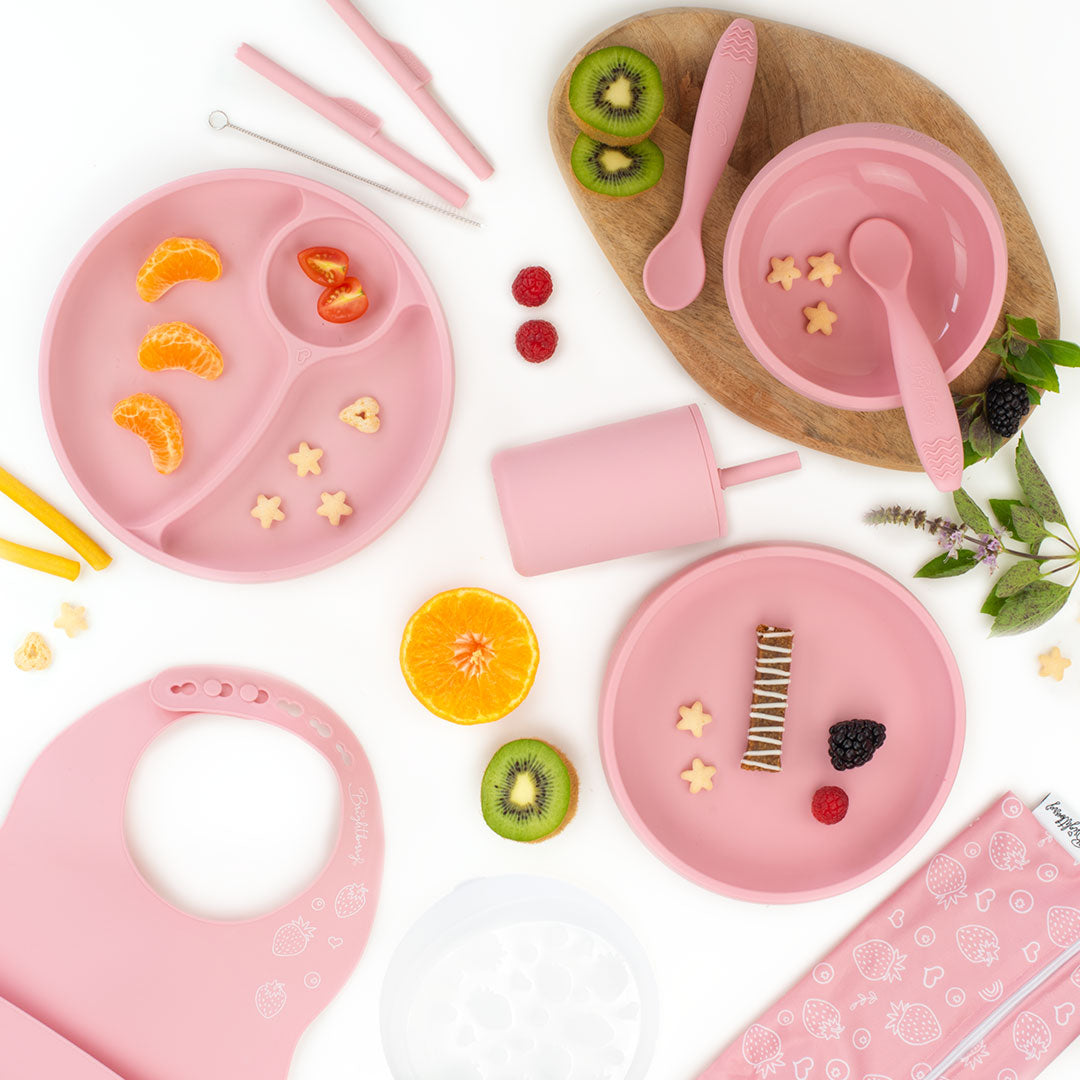
theBase Easy-Scooping Plate
theBase is the main Brightberry plate for the Little Explorer stage.
Its broad surface keeps food within easy reach, while the inward-curved walls give the spoon an edge to work against during those first loading attempts.
It also fits the Stokke Tripp Trapp tray, making it the Brightberry plate to choose for that setup.
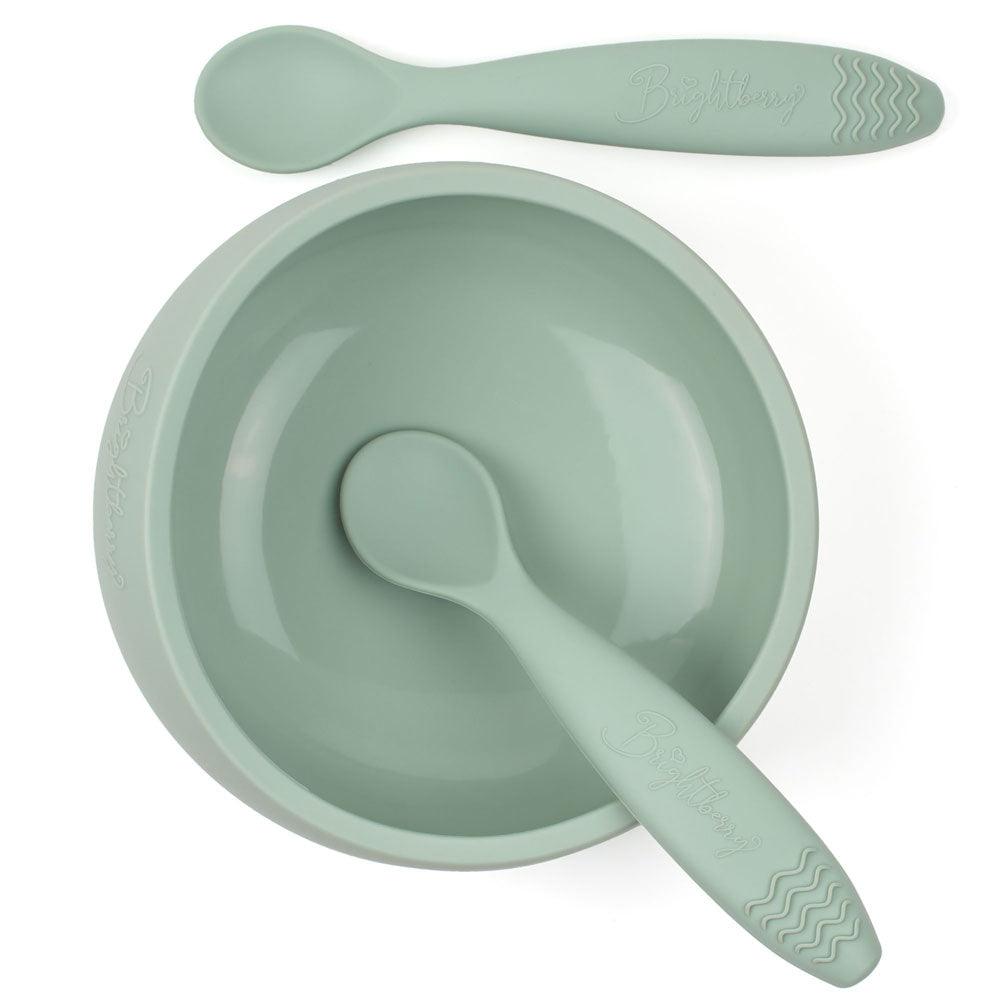
Self-Feeding Spoons
Brightberry’s Self-Feeding Spoons can continue from Starting Solids as your baby becomes more involved.
Offer a pre-loaded spoon or let them experiment with dipping and loading it themselves. Having more than one spoon can be useful when one is being held, inspected or temporarily dropped.
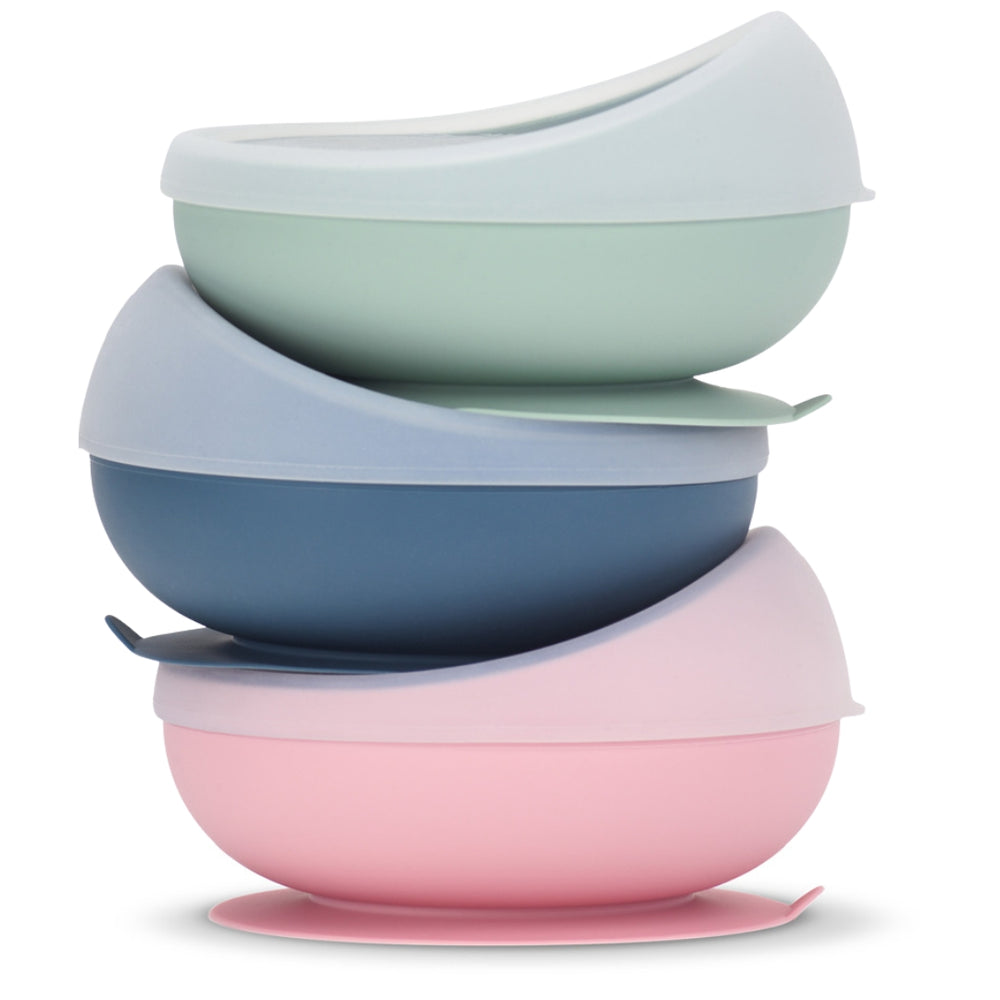
theOne Suction Bowl
theOne bowl remains useful for meals that work better in a bowl.
Its curved walls provide an edge to work against, while the suction base can help keep the bowl stable during reaching, grabbing and early spoon practice.
Choose the bowl on its own if you already have spoons, or the bowl and spoons set if you would like both together.
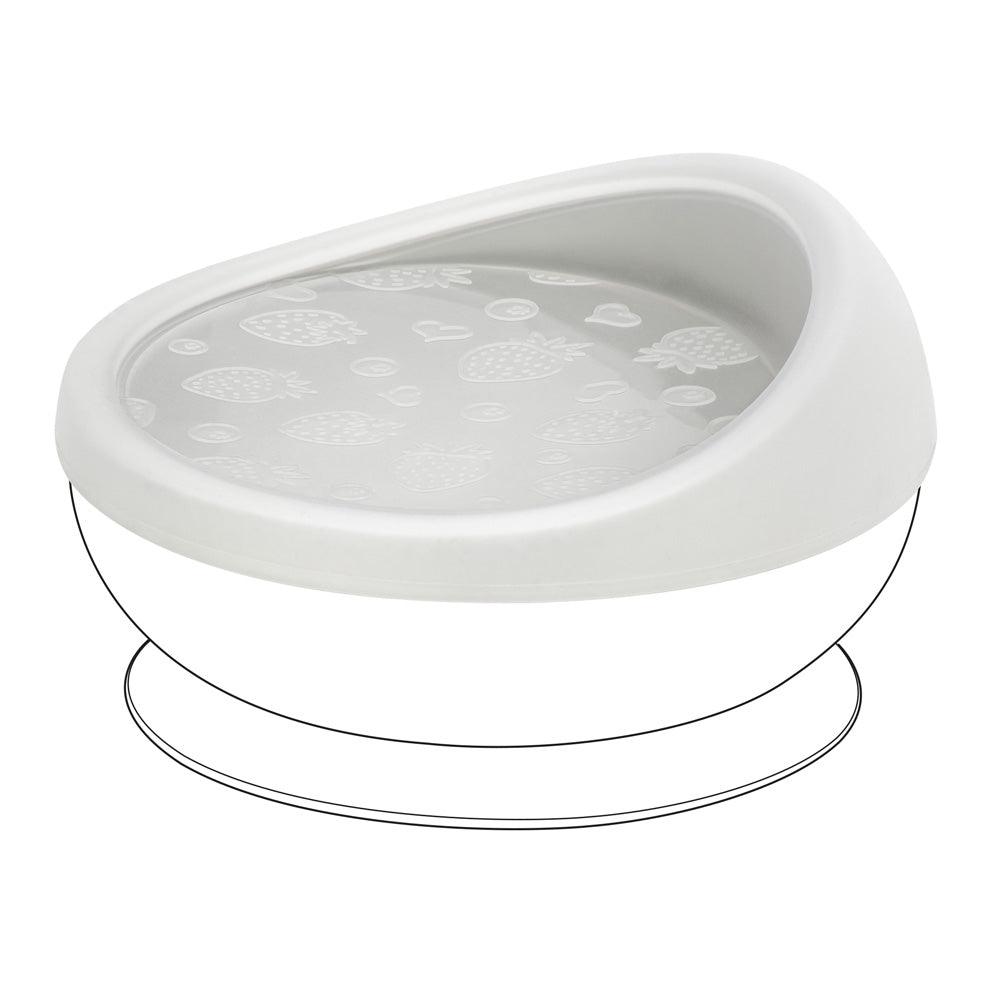
Silicone Bowl Lid
The matching lid turns theOne bowl into a practical option for preparing, covering and storing food.
Check the current product page or packaging for care and reheating instructions.
Bib with Waterproof Bag
The silicone bib catches some of what misses the mouth, while the waterproof bag helps contain used tableware or a bib when you’re away from home.
Complete Suction Mealtime Set
If suction is the problem you’re trying to solve, the Complete Suction Mealtime Set combines theOne bowl, theBase plate and a compatible suction solution.
It addresses both parts of the setup: the tableware and the tray surface underneath it.
Check that the selected Suction Sticker fits your high chair before ordering.
Complete Baby Dinner Set
The Complete Baby Dinner Set is a buy-ahead option for families who would rather have one broader collection of tableware.
It includes products that are useful during Little Explorer and others that become more relevant in the Independent Eater stage. Your baby does not need every piece at once.
Using a Tripp Trapp?
Choose theBase for the Stokke Tripp Trapp tray.
The tray has a textured surface, so suction may need a Brightberry Tripp Trapp Suction Sticker or placemat to create a smooth contact area.
theValle Divided Plate does not fit the Tripp Trapp tray.
For the strongest suction
Start with a clean, dry and smooth surface, then press firmly in the centre until the bowl or plate grips.
Crumbs, moisture and textured or worn trays can interrupt the seal.
Brightberry Suction Stickers create a smooth contact area on compatible high-chair trays. Choose the sticker made for your high chair, or check your tray measurements and available flat area before choosing a Universal Suction Sticker.
Looking for a divided plate or smoothie cup? Explore our Independent Eater collection for the next stage.
What comes next
As scooping and wrist control develop, you may notice a stronger drive to do everything without help.
Interest in a fork, fuller meals and more independent straw drinking are part of the bridge into Independent Eater, usually from around 12 months.
Why parents trust Brightberry
Every Brightberry product is designed by Mateya, an industrial designer, mum of two and Brightberry's founder on the Sunshine Coast.
Brightberry's designs have received awards including the Australian Good Design Award.
For materials, testing and care information, check the relevant product page or packaging, as details differ between products and components.