
Is Your Baby's Silicone Tableware Actually Safe? What Most Brands Won't Tell You

Australia has no mandatory certification requirement for silicone baby tableware.
That means any brand can sell a silicone bowl, plate, or spoon and make no claims about what's in it, how it was tested, or whether it's safe for daily contact with food and little mouths.
Walk into any baby store or open Instagram, and you'll see it on almost everything: food grade silicone. On bowls, plates, spoons, cups, bibs... marketed to parents as the safe, modern alternative to plastic. It sounds reassuring. The problem is, it means almost nothing on its own.
I'm Mateya, the founder of Brightberry, a mum of two, and an industrial designer. I built a brand around silicone tableware, which means I've spent years going deep on what it actually means to make a product safe, not just label it that way. Here's what I've found, and what I think every parent deserves to know before deciding what their child eats from every single day.
"Food grade silicone" is a marketing claim, not a certification
Any brand can print "food grade silicone" on packaging without having commissioned a single independent test. The label tells you nothing about what was actually tested, by whom, or what the results showed.
The same applies to "BPA free." Silicone doesn't contain BPA; BPA is a chemical used to harden certain plastics and isn't present in silicone by nature. So while the claim is true, it's beside the point. The real questions about silicone safety have nothing to do with BPA.
Why silicone is fundamentally different from plastic, and why that still matters
Plastic is made from petroleum. The chemicals that make plastic a genuine concern for parents. Phthalates, and the microplastic particles that have been found in food, water, and even breast milk, come from that petroleum base and from the additives used in manufacturing.
Silicone is chemically different. It's made from silicon (a natural element found in sand and quartz), bonded with oxygen, carbon, and hydrogen. It doesn't contain petroleum-derived plasticisers. It doesn't shed microplastics. It's stable across a wide temperature range, doesn't degrade with washing, and doesn't leach the substances that make plastic a genuine concern for daily use with young children.
But (and this matters) silicone is not automatically safe just because it isn't plastic. Not all silicone is the same quality, and quality depends entirely on what's in it and how it was made. For more on how silicone compares to plastic across a range of factors, see our guide to silicone vs plastic for baby products.
The real concern: what's actually in the silicone
The question isn't BPA. The question is what else might migrate from the material into food, and whether it's been tested.
Phthalates are the most relevant concern. They're a family of chemical compounds used as plasticisers, and several, particularly DEHP (di-2-ethylhexyl phthalate), are classified as endocrine disruptors. That means they interfere with the body's hormone system. The Australian government takes this seriously: under Consumer Protection Notice No. 11 of 2011, children's eating vessels and utensils for children up to 36 months cannot contain more than 1% DEHP by weight. That is the one actual legal requirement in Australia that directly applies to baby tableware.
The concern isn't that a single meal from a poorly tested bowl causes obvious harm. It's cumulative exposure: the same bowl, the same spoon, used at every meal from six months old, for years. Young children's bodies and endocrine systems are still developing, which makes them more vulnerable to the effects of repeated low-level chemical exposure than adults.
Heavy metals — lead, cadmium, arsenic, mercury, chromium, barium, antimony, selenium — are another category tested in serious safety assessments. These can be introduced through pigments and colourants added during manufacturing. A product with beautiful colours and no chemical testing is a product where you simply don't know what's in the pigment.
Peroxide residues matter too, and this is where silicone quality really diverges.
Platinum silicone vs standard silicone: why the curing method matters
Silicone can be cured-set from a compound into a solid product in two main ways: using a peroxide catalyst or a platinum catalyst.
Peroxide-cured silicone is cheaper to produce. It can leave residues from the curing process in the finished material. Those residues are what give low-quality silicone products their characteristic rubbery smell, and they're what migration testing for peroxide residues checks for.
Platinum-cured silicone uses a platinum catalyst. The result is a purer material: no curing residues, no off-smell, and chemically stable. It's the standard used in medical applications and high-quality food-contact manufacturing. When a brand says "platinum silicone," that claim should be backed by a test showing peroxide residues absent in the finished product.
The pinch test is a simple field check worth knowing: pinch, twist, and stretch a silicone product. If white shows through, the silicone contains fillers — added materials that reduce cost but dilute quality. 100% platinum-cured silicone won't show white when stretched because there are no fillers to reveal.
Why material testing isn't the same as finished product testing
Here's something most parents don't know, and most brands don't explain: a material certificate from a silicone supplier is not the same as testing your finished product.
Your manufacturer can provide documentation for the raw silicone compound they use. But that raw compound changes during production. Pigments and colourants are added before moulding, and those pigments can themselves introduce contaminants. Then the product is compression moulded and heat-cured. The finished bowl or spoon your child uses every day is a different thing from the raw silicone it started as.
Testing the finished product, the actual bowl, in the actual colour, made from the actual production batch, is the only way to know what's genuinely in it at the point your child uses it. That's what migration testing does: it takes the finished product and measures what actually transfers into food simulants under real-use conditions.
What migration testing actually involves
Migration testing puts the finished product through conditions that simulate real use. The product is submerged in food simulants, typically distilled water (simulating watery foods), 3% acetic acid (simulating acidic foods like fruit purée), and 10% ethanol (simulating fatty foods), at set temperatures and durations. The lab then measures what, if anything, is transferred from the silicone into each simulant.
A thorough food contact migration test will check:
- Overall migration — total substance transfer across simulant types
- Phthalates including DEHP, DBP, BBP, DIBP, DINP, and others — the endocrine-disrupting plasticisers
- Heavy metals — lead, cadmium, arsenic, mercury, chromium, barium, antimony, selenium
- Peroxide residues — confirming the curing quality
- Volatile organic compounds (VOC) — chemical off-gassing from the material
- Total platinum — confirming the curing agent is present but stable
Not detected or absent across all of these categories is the result you want to see.

Safety testing goes beyond chemistry
Chemical safety matters, but so does physical safety, and this is something parents don't always think about when choosing feeding products.
EN 14372:2004, the European standard for child feeding utensils, covers products intended for children up to 36 months and tests both mechanical and chemical requirements: sharp edges, sharp points, small parts that could detach, tensile strength, torque, tear resistance, and drop performance.
This matters more than it sounds. Spoons that snap under force, bowls where the suction base can detach and become a small part hazard, cups where components pull free under a determined toddler's grip, these are the physical risks that legitimate mechanical testing is designed to catch.
Mechanical testing ensures products hold up to exactly the kind of daily wear a determined toddler delivers, and that they're safe when they do.
What the LFGB certification means, and how it compares to the FDA
LFGB is the German food safety code — Lebensmittel- und Futtermittelgesetzbuch. For silicone products, LFGB testing is governed by BfR Recommendation XV (the German Federal Institute for Risk Assessment). It's widely regarded as the most comprehensive food contact standard for silicone globally.
The key things LFGB tests that standard FDA testing does not include: extractives in three food simulants (not just water), volatile organic compounds, peroxide residues, and total platinum. It also enforces stricter migration limits on certain substances. FDA certification does not require VOC testing at all. That means FDA-certified silicone has never been asked to meet the European VOC limit, and in our own experience testing FDA silicone against European standards, it did not pass. VOC testing is one of the key requirements that separates LFGB from FDA, and one of the reasons we moved our food-contact range to LFGB platinum silicone.
US FDA 21 CFR 177.2600 is the baseline standard for food-contact silicone in Australia and the US. It tests extractives in distilled water and n-hexane, and passing it is the minimum required to legally sell food-contact silicone products. Both standards require testing by accredited third-party laboratories; neither is a self-declaration.
EU ResAP(2004)5 is the European Council resolution on silicones used for food contact. It covers overall migration and sits alongside EN 14372 (child feeding utensil mechanical and chemical safety) as the EU framework for products like bowls, plates, and spoons.
What we test at Brightberry: exactly
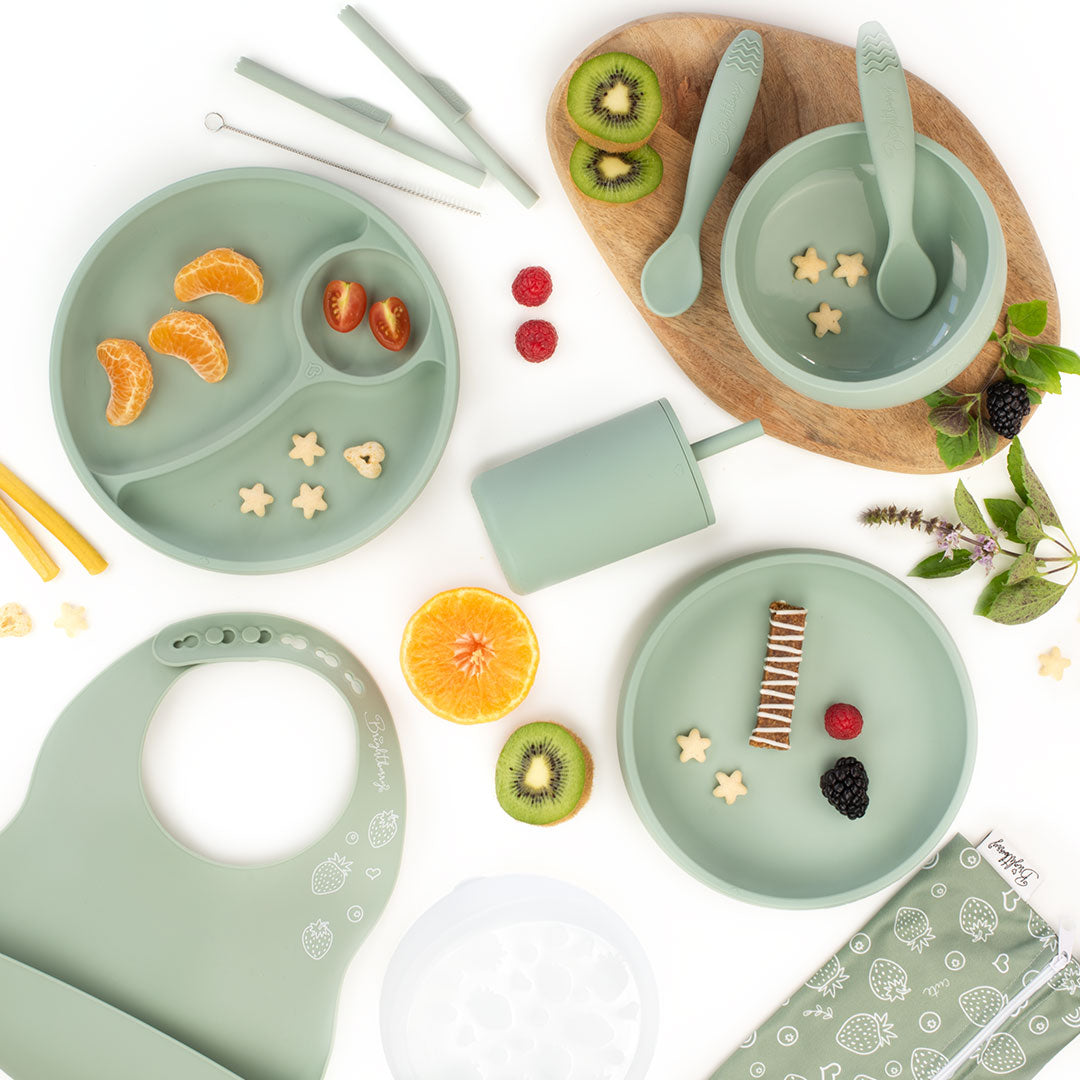
All Brightberry products are made from platinum-cured silicone. Every product range has been independently tested by accredited third-party laboratories: TÜV Rheinland (one of the world's largest testing organisations) and CTT (Guangdong Consumer Testing Technology Co., Ltd.), both internationally accredited.
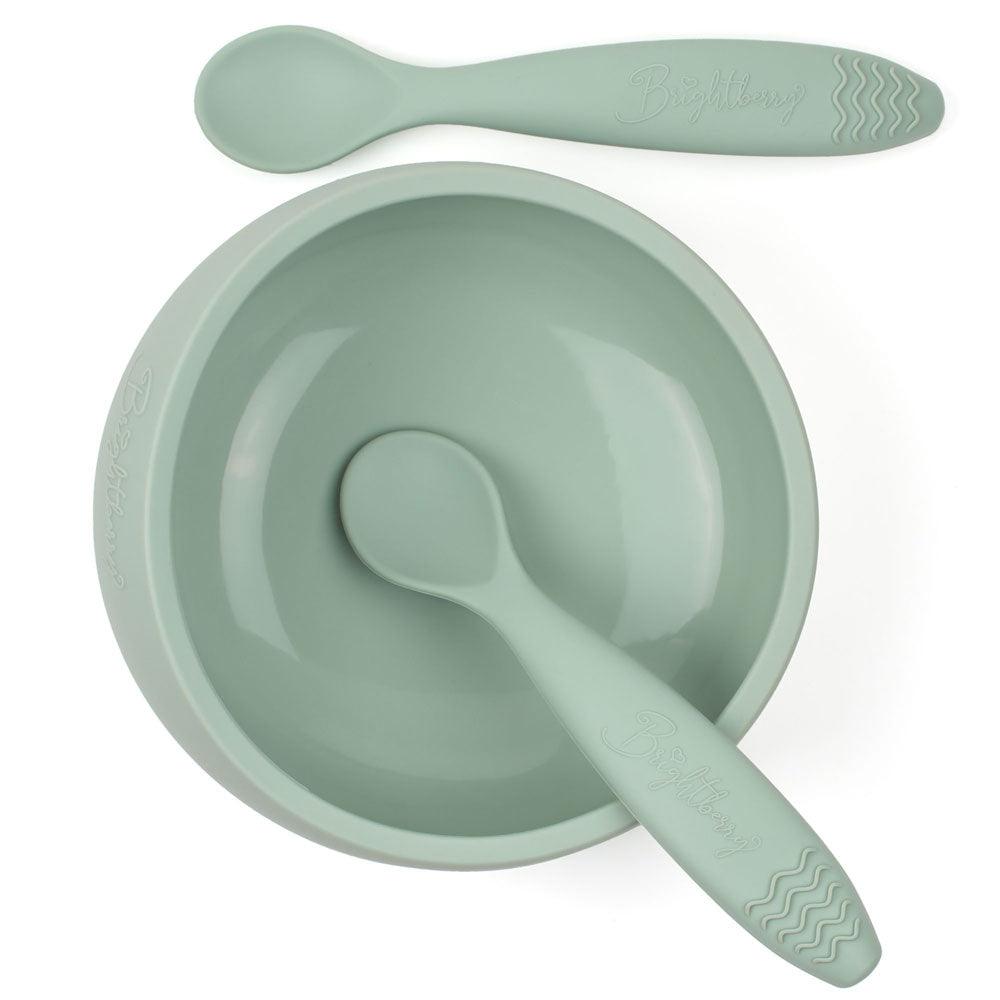
Bowls, plates, spoons, lids and placemats
Tested to the full LFGB standard via BfR Recommendation XV: extractives in distilled water, 3% acetic acid, and 10% ethanol — all not detected; peroxide residues — absent; volatile organic matter — pass; total platinum — pass. Also tested to EU ResAP(2004)5 overall migration — not detected; EN 14372:2004 mechanical and chemical safety — all pass; US FDA 21 CFR 177.2600 food contact — pass; heavy metals including lead, cadmium, arsenic, mercury — all not detected; phthalates including DEHP — not detected; Australian DEHP requirement (Consumer Protection Notice No. 11 of 2011) — not detected.
These are finished product tests on actual manufactured items in production colours, not material certificates.

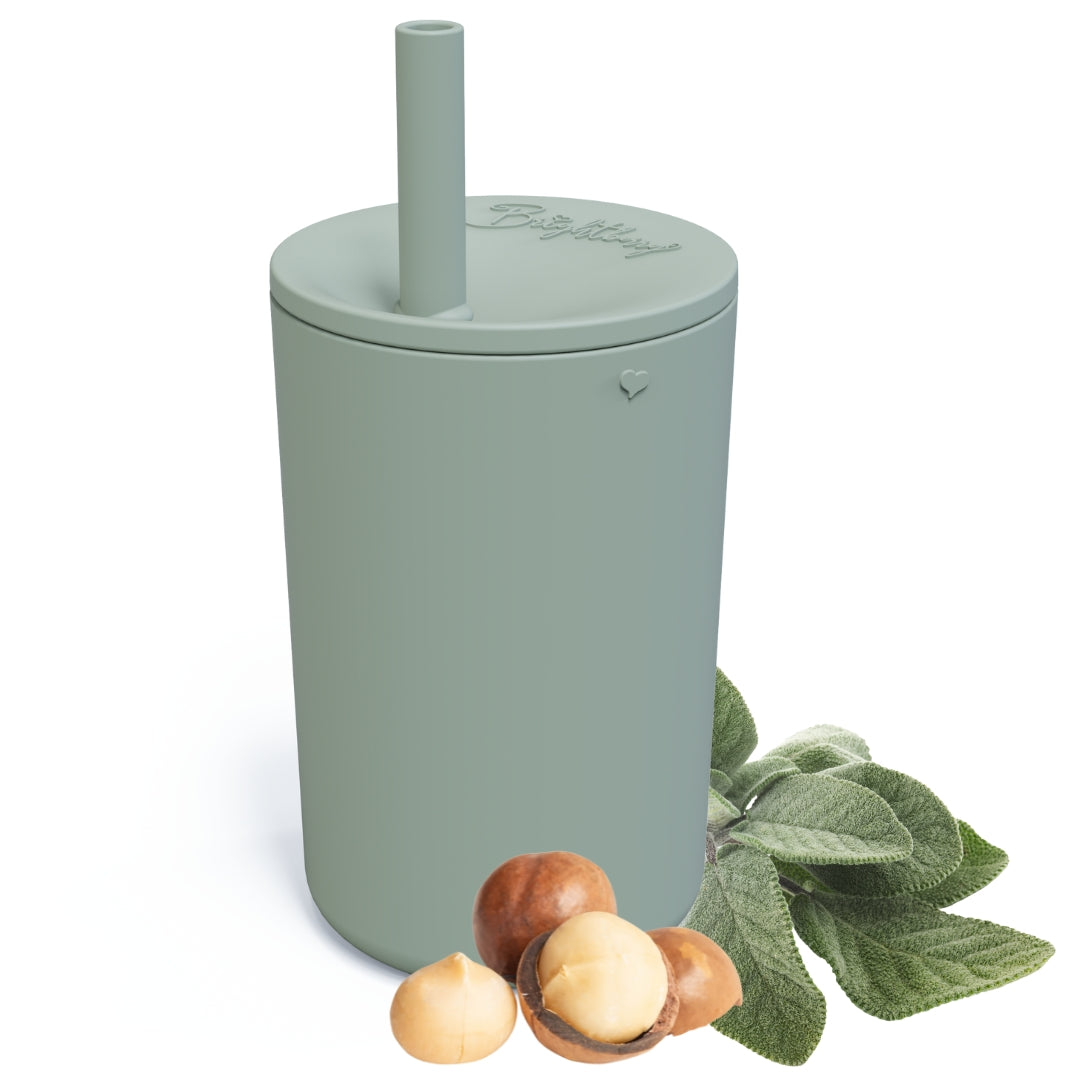
Smoothie cup and straw
The Brightberry Smoothie Cup and straw are tested to EN 14372:2004 in full — mechanical safety, VOC, heavy metals — all pass; EU ResAP(2004)5 overall food contact migration — not detected; US FDA 21 CFR 177.2600 — pass; and Australian DEHP requirements — not detected. All tests are on the finished product by CTT.
The BfR Recommendation XV extractives (the LFGB-specific component) are not yet completed for this product. We use LFGB-grade platinum silicone and the food contact migration testing is comprehensive. Full LFGB finished product testing is on our roadmap for the next production cycle.

Bibs
Bibs are a wearable product. They sit against a child's skin rather than functioning as a food-contact vessel in the way a bowl or plate does. Our bibs are tested to US CPSIA/ASTM F963 safety standards, including: phthalates covering eight compounds, including DEHP — all not detected; soluble heavy metals covering eight elements — all not detected; total lead — not detected; cadmium — not detected; BPA — not detected; mechanical safety; and flammability. Tested by PTC (Precise Testing & Certification), CNAS-accredited.
Teethers
Tested to Australian and New Zealand toy safety standards (AS/NZS ISO 8124) covering mechanical and physical safety, flammability, and heavy metal migration, plus EU ResAP(2004)5 overall food contact migration, EN 14372 volatile compounds content, US FDA 21 CFR 177.2600, and DEHP compliance under Australian Consumer Protection Notice No. 11 of 2011. All pass. Tested by both TÜV Rheinland and CTT.
Every product
Every Brightberry product is tested for DEHP under Australian Consumer Protection Notice No. 11 of 2011. In every case, result: not detected.
Being honest about what we don't claim
Not every Brightberry product has yet completed the full LFGB finished-product certification suite, and I'm not going to claim otherwise.
The smoothie cup and straw don't yet have the full BfR XV extractives tests; those are on the roadmap. Some bib colours are on FDA-certified silicone batches while we transition the full range to LFGB silicone.
I mention this because accuracy is the point. The testing we have is real, from accredited labs, and covers what actually matters for daily safety. What every product does have: platinum-cured silicone, independent third-party testing by accredited labs, and actual results, not just a badge on a website.
What to look for before you buy from any brand
- Can they name the standard? LFGB, FDA 21 CFR 177.2600, EN 14372, ResAP(2004)5, Consumer Protection Notice No. 11 of 2011, these are specific. "Certified safe" or "tested" without a named standard means nothing.
- Was the finished product tested, or just the raw material? A supplier material certificate is not a finished product test. Ask directly.
- Who did the testing? An accredited independent third-party lab: TÜV Rheinland, CTT, SGS, Intertek. Not an internal test, not a supplier's data sheet.
- What were the phthalate results? Specifically DEHP. The answer should be: not detected.
- Does it use platinum-cured silicone? The pinch test is a simple check: stretch the silicone and look for white. No white means no fillers. Platinum-cured silicone also has no chemical smell.
- Has the product been tested mechanically? Especially relevant for spoons, suction bowls, and cups, anything a determined toddler will grip, pull, bite, or drop repeatedly.
The short version
"Food grade silicone" tells you almost nothing. What matters is: platinum-cured silicone to start with, independent migration testing on the finished product, not just the raw material, and actual results: phthalates not detected, heavy metals not detected, peroxide residues absent.
Silicone, tested properly, is genuinely the better material for baby tableware. The problem is that most silicone baby products on the market haven't been tested properly, and there is currently nothing in Australian law requiring them to be.
That gap is what we close by testing beyond what's required, and telling you exactly what we found.
Shop Brightberry's independently tested silicone tableware
Shop Complete Sets →Shop Suction Bowls →
Shop Smoothie Cups →