
Best Kids Smoothie Cup Australia 2026: What to Look For

If you've ever handed a toddler a smoothie in the wrong cup, you already know what happens next. Smoothie on the high chair. Smoothie on the floor. Straw launched across the kitchen.
Finding a kids' smoothie cup that actually works, one that handles thick drinks, survives toddler drop, and doesn't create more work for you, takes more than picking the cutest option. Here's what actually matters.
Why smoothie cups for kids need to be different
Most kids' cups are designed for water or thin liquids. Smoothies are thicker, and that changes everything: the straw needs a wider bore, the lid needs a secure seal, and the whole cup needs to handle being dropped, shaken, and thrown by a determined two-year-old.
A cup that works for water will often frustrate a toddler trying to sip a banana smoothie. They'll suck and get nothing, then give up, or squeeze the cup until the lid pops off.
The right cup makes it easy for small kids to drink independently, which is the whole point.
What to look for in a kids' smoothie cup
1. Free-flowing straw, not a valve
This is the single most important feature for thick drinks. Many toddler cups use a valve inside the straw to prevent spills. That valve works fine for water, but it makes smoothies nearly impossible to sip. Kids have to suck hard, get frustrated, and often give up.
A free-flowing straw lets smoothies pass through easily with no resistance. Speech pathologists also recommend free-flowing straws over valved ones when transitioning children from bottles, because they support proper lip and tongue positioning.
The trade-off is that a free-flowing straw is less leak-proof if the cup tips completely upside down. That's a reasonable compromise. The cup is designed for supervised drinking of thick drinks, not to be sealed in a bag like a water bottle.
2. A straw that stays put
Toddlers pull straws out. It's reflexive. A cup with a straw stopper, a mechanism that holds the straw in place even when pulled, prevents the mess that follows.
Look for a stopper built into the straw itself rather than a fiddly cap or clip you can lose. The stopper should allow the straw to flex slightly but resist being tugged out completely.
3. Lid that doesn't pop off
A secure lid is non-negotiable. Some kids' cup lids clip on; others screw on or lock. For a smoothie cup, a lid that locks or has meaningful resistance is important. Toddlers will attempt to remove it, and a smoothie lid coming off mid-drink is a significant mess.
4. Material: silicone vs stainless steel
Most kids smoothie cups in Australia are made from either silicone or stainless steel. Both are safe. The difference comes down to practical use.
Silicone is fully dishwasher safe with no fading or coating issues, microwave safe, so you can warm a drink directly in the cup, and soft against teeth and gums, which makes it better for younger toddlers who bite straws. It doesn't produce condensation on little hands, is lightweight and easy for small hands to hold when full, and doesn't rust, dent, or chip.
Stainless steel offers better insulation and keeps drinks cold longer, but it comes with real practical downsides. Stainless steel can impart a metallic taste to drinks, which many kids notice and refuse.
Some manufacturers add a thin plastic inner coating to address this, but that largely defeats the purpose of choosing stainless in the first place. It's also not microwave safe, the powder coating can fade with repeated dishwashing, and it's heavier than silicone which can make it harder for younger toddlers to manage.
5. Size and weight when full
A cup that's easy for an adult to hold becomes heavy and awkward for a toddler once it's full. Look for cups specifically sized for small hands, ideally 200–250ml capacity, and lightweight materials. If your child is still in a high chair, a cup they can manage independently makes mealtime smoother for everyone.
6. Easy to clean
Smoothie residue builds up quickly in straws and lids. A cup that's fully dishwasher safe and comes with a straw cleaning brush is worth the investment. Cups with multiple small silicone valves or complex lid mechanisms are harder to clean thoroughly and can harbour mould over time.
At what age can kids use a smoothie cup?
Speech pathologists recommend introducing straw drinking from around 6 months with water and thin liquids. For smoothies and thicker drinks, most children are ready to drink independently from around 9 months, once they have enough coordination to manage a cup with some confidence.
Free-flowing straws are generally easier to learn on than valved ones, because children don't need to generate as much suction to get the drink moving.
The key developmental benefit of straw drinking, beyond just getting nutrition in, is oral motor development. Sipping from a straw strengthens the lip, tongue, and cheek muscles involved in speech and swallowing. This is why speech pathologists and occupational therapists recommend transitioning children to straw cups and open cups rather than extended use of traditional sippy cups.
Why smoothies work so well for toddlers
Toddlers are notoriously selective eaters. Smoothies are one of the few ways to get fruit, vegetables, and dairy into a child who refuses to eat them on a plate.
Blending spinach with frozen banana, berries, and oat milk produces a drink that tastes sweet, looks fun, and delivers a meaningful amount of nutrition in a single serving. When you pair it with a cup that makes drinking enjoyable and independent rather than a wrestling match, kids are more likely to finish it and ask for more.
The right cup doesn't just hold the smoothie. It becomes part of the routine.
The Brightberry Kids Smoothie Cup
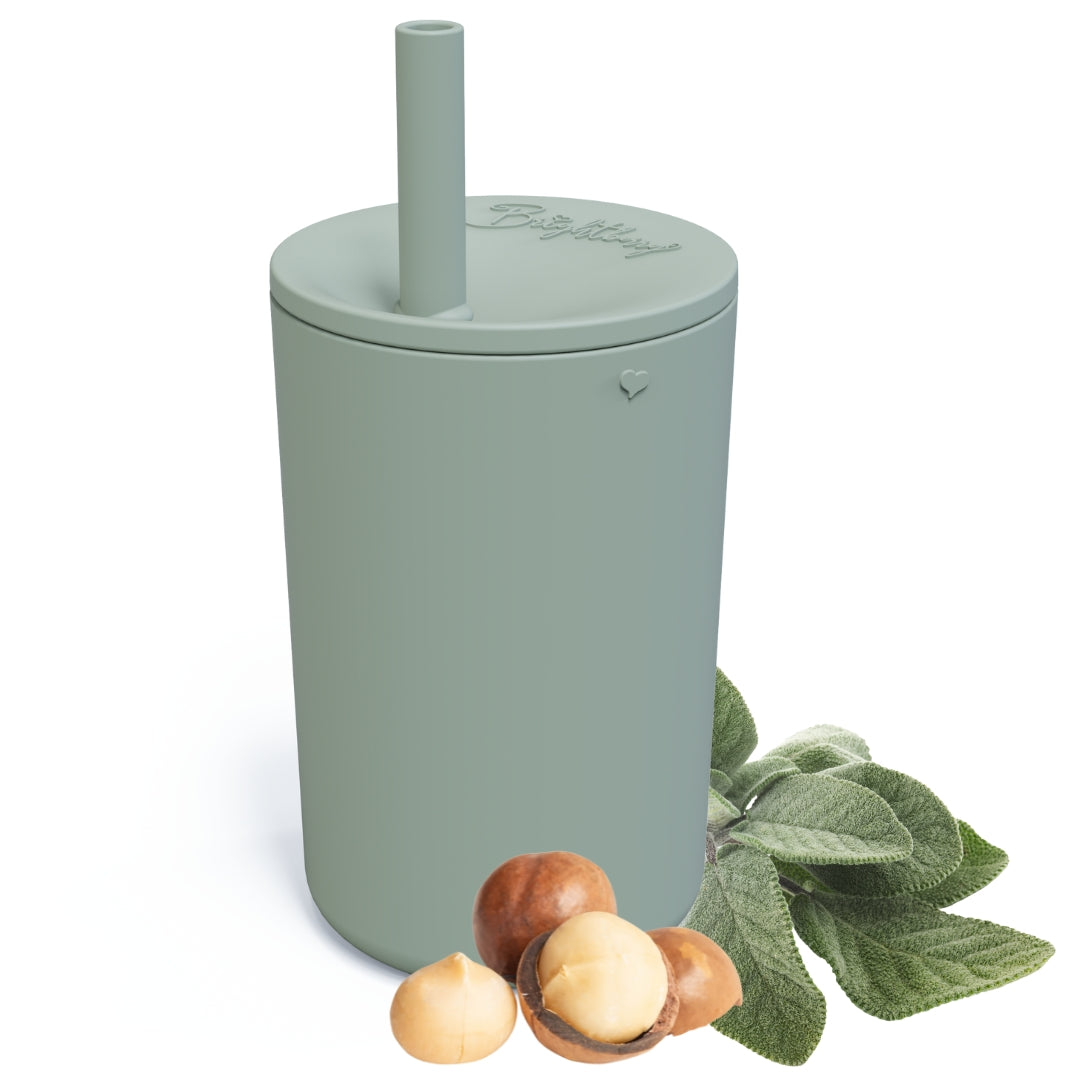
The Brightberry Kids Smoothie Cup was designed specifically for thick toddler drinks. It has a free-flowing straw that handles smoothies, milkshakes, and yoghurt drinks without resistance, and a built-in straw stopper that holds the straw in place even when toddlers tug and twist.
The lid is designed to stay sealed even if the cup is knocked over. It's not fully spill-proof if turned completely upside down, but it handles normal toddler use confidently.
Made from LFGB platinum silicone, the highest food safety grade available, it's fully dishwasher and microwave safe, free from BPA, PVC, phthalates, and microplastics. It comes with a straw cleaning brush and is available in a range of colours.
At 102 reviews and a 4.8-star average, it's one of the most trusted kids smoothie cups available in Australia.
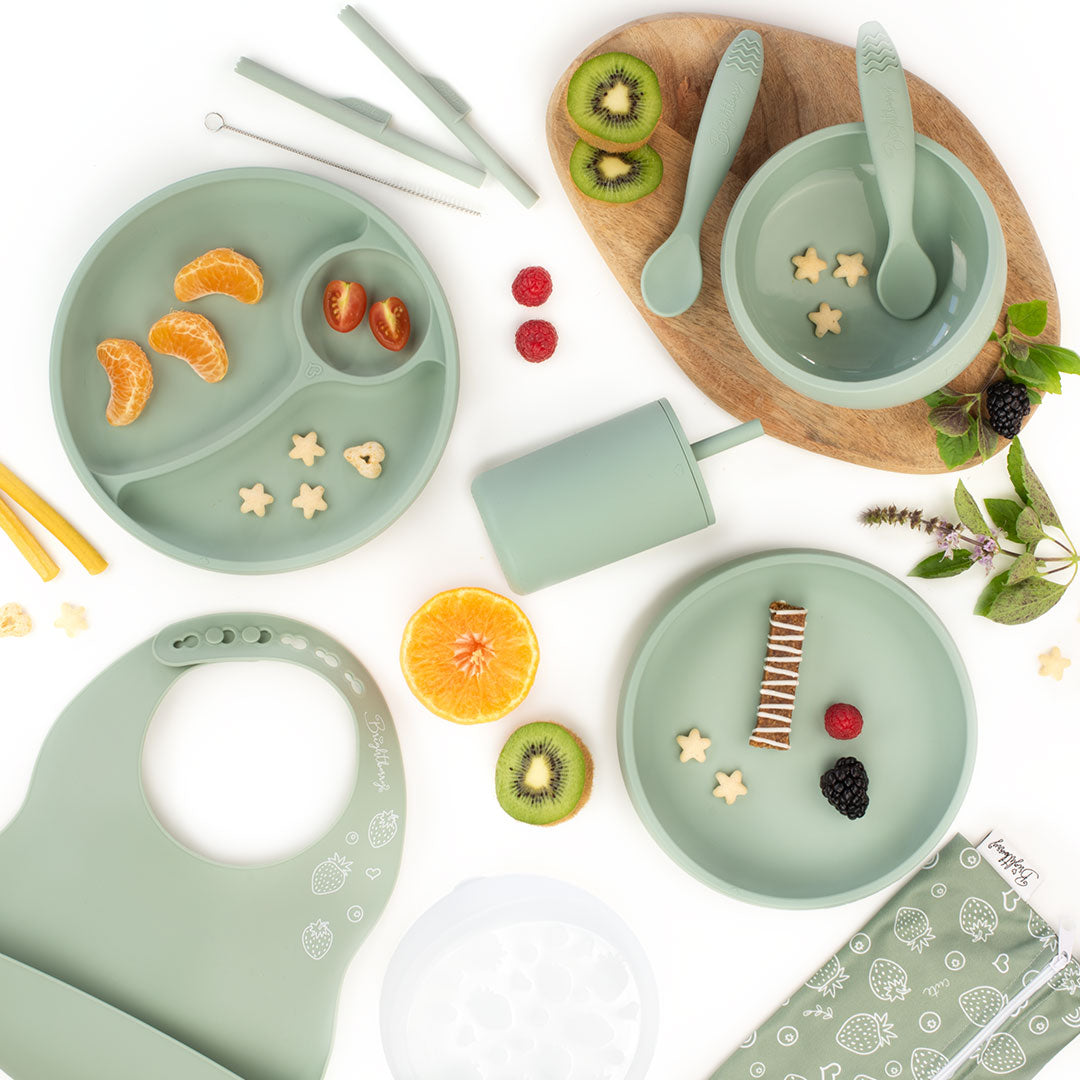
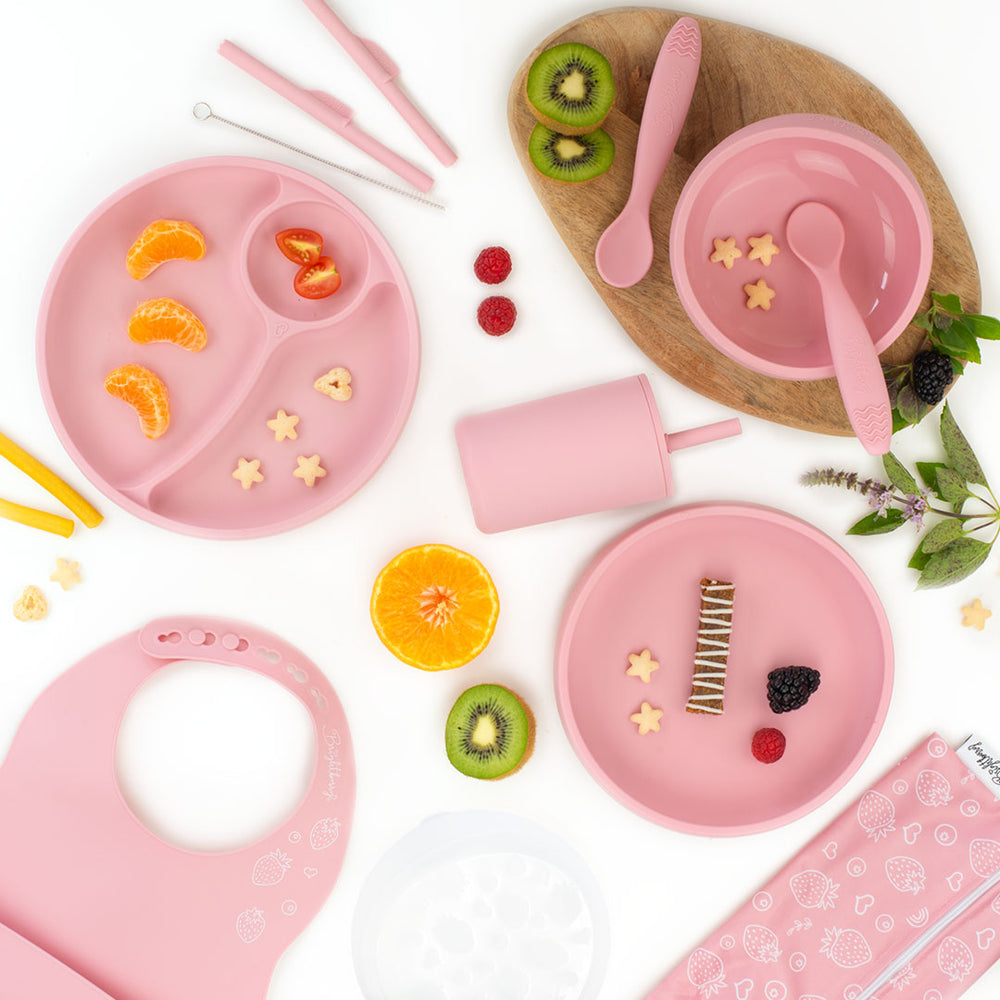
It also fits into the small round section of the Brightberry Divided Plate, making it a natural pairing for mealtime.
Shop the Brightberry Kids Smoothie Cup - on sale now →
Quick checklist: what to look for
- Free-flowing straw (no valve): essential for thick drinks
- Built-in straw stopper: prevents the straw being pulled out
- Secure lid: resists toddler attempts to remove it
- Silicone material: microwave safe, dishwasher safe, soft on gums, lightweight
- 200–250ml capacity: the right size for small hands and small tummies
- Includes a straw cleaning brush: important for hygiene
- LFGB or FDA food-grade silicone: highest safety standard
Brightberry designs feeding tools for babies and toddlers that support self-feeding and reduce mealtime stress. All products are made from LFGB platinum silicone and designed by a mum and an industrial designer on the Sunshine Coast, Australia.