
How to Choose a Baby Spoon and What Most Parents Don't Know
When I started introducing solids to my daughter, I did what most parents do. I bought plastic spoons. They seemed practical. Easy to find, cheap, and they came in cute colours.
But plastic spoons are hard. And when your baby is teething, the last thing you want near their sore gums is something rigid that scratches. Worse, babies chew on spoons constantly, and with plastic, you're essentially letting them scrape tiny particles straight into their mouths.
So I switched to silicone. Everyone said silicone was the answer — soft, safe, gentle on gums. And they were right about that part.
What nobody told me was that most silicone spoons are too floppy to actually work.
The Problem with Pure Silicone Spoons
When you buy a silicone spoon online, it looks great in the photo. Soft, colourful, baby-safe. What you can't see is whether it has any structure inside. And most don't.
Pick up a pure silicone spoon and try to scoop yogurt or puree — the spoon bends under the pressure. The food goes sideways. Your baby gets frustrated. You get frustrated. And you end up doing most of the scooping yourself, which defeats the whole point of self-feeding.
Parents don't talk about this because most don't realise there's an alternative. They assume that's just what silicone spoons are like.
It doesn't have to be.
Watch How Our Spoons Work
Watch our silicone baby spoon unboxing and comparison on YouTube →
What to Look For: The Core Matters
A well-designed silicone baby spoon has two things working together. A soft silicone exterior that's gentle on gums and safe for babies who chew everything. And a firm internal core that gives the spoon enough structure to actually scoop.
The core material matters too. Some manufacturers use a metal rod inside the handle to add rigidity. The problem is that metal and silicone don't bond the same way: bend the spoon enough times, and the metal rod can work its way through the silicone. That's a real safety risk for a baby putting the spoon straight into their mouth.
We chose nylon specifically because it bonds properly with silicone. Same structural support, none of the risk. You can bend our spoons repeatedly, and the core stays exactly where it should.
Why Brightberry Spoons Are Designed This Way
After testing what was available and finding the same floppy problem every time, we designed our own. Here's what makes them different:
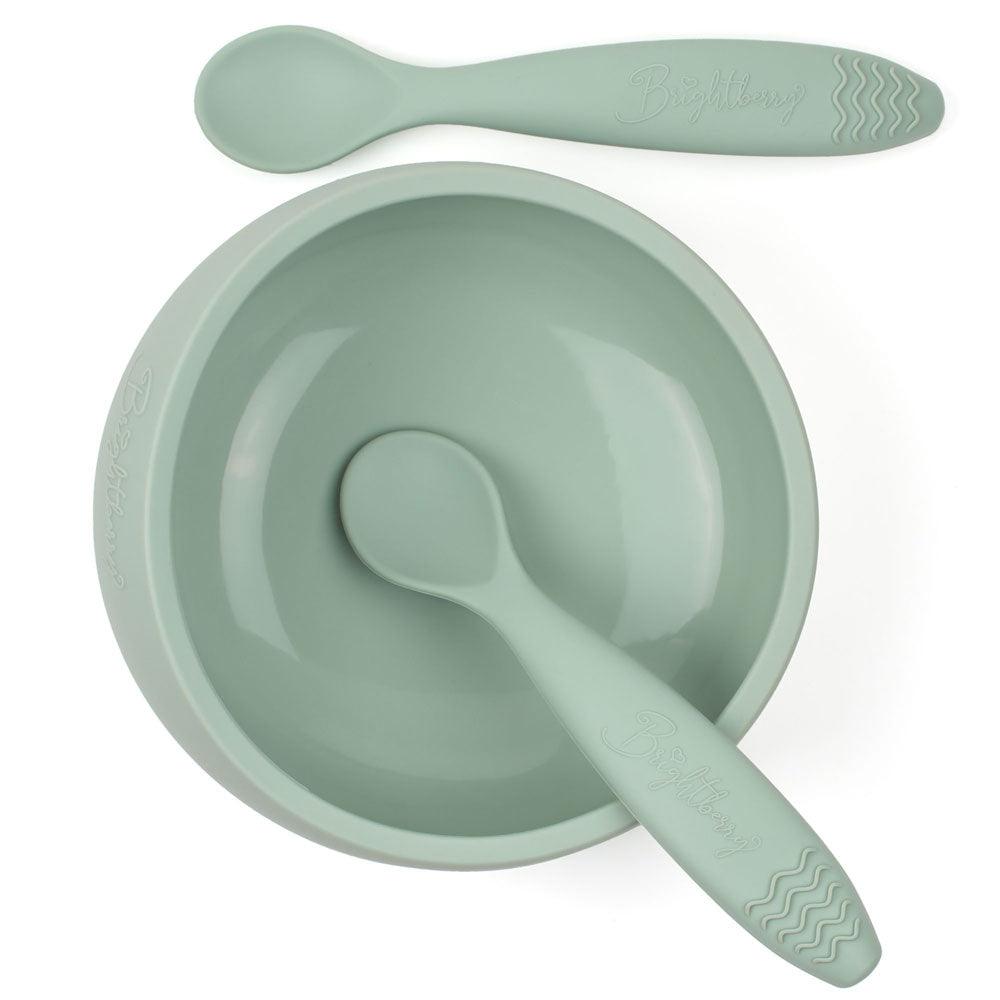
Two spoons in every pack. When you start feeding your baby, they will grab the spoon right out of your hand. So we include two identical spoons: one for you, one for them. They need to be identical because babies want exactly what mum or dad has. No compromise.
Wide, ergonomic handle. The handle is wide and flat, so it doesn't rotate in little hands: easier to grip, easier to control. It also curves upward slightly so you can pick it up off the table without fumbling.
Wider spoon bowl. Deliberately wider than most baby spoons to prevent babies from pushing the spoon too far into their mouths. Less gag reflex, more confidence at the table.
Curved spoon bowl. The bowl curves upward slightly, which promotes proper lip closure — an important early feeding skill that supports oral development.
Tab on the handle. A small tab on the handle stops the spoon from sliding into the food. No more fishing a spoon out of a bowl of puree.
Textured tip on the handle. The end of the handle has a textured pattern designed to give sore gums something to work against. Because babies who are learning to eat are also usually growing teeth, and they will chew that handle whether you plan for it or not.
LFGB platinum silicone throughout. Silky to touch, non-slip matte finish, gentle on gums and emerging teeth. Dishwasher safe. Independently tested and certified. Because in Australia, safety testing is voluntary, and not every company invests in it.
Please be careful when selecting baby spoons. Not all products on the market are tested to the same standard.
I know you will love them. Give our spoons a try — shop Brightberry silicone spoons here.

Want to know when babies start using a spoon and how to teach self-feeding? Read our complete guide.