
Divided Plates for Toddlers: Do They Actually Help? (2026 Guide)
If your toddler refuses to let foods touch, or you're trying to serve a balanced meal without a battle, a divided plate can make a real difference. But not all divided plates are worth buying. Here's what actually matters, and what makes a silicone divided suction plate the right choice for most families.

What is a divided plate for toddlers?
A divided plate has separate sections that keep different foods apart on the same plate. Most have two or three sections of different sizes: one larger section for a main food and smaller sections for sides or fruit.
The right divided plate does more than separate food. It helps toddlers understand what's on offer, makes self-feeding easier, and gives parents a simple way to serve a balanced meal without negotiating over portion sizes.
Are divided plates good for toddlers?
Yes, for most toddlers from around 6 months. The separate sections reduce visual overwhelm. A plate with three distinct foods in their own spaces is easier for a young child to process than a mixed pile. This is especially useful when introducing new foods alongside familiar ones.
Divided plates are particularly helpful for:
- Toddlers who are sensitive to foods touching
- Children learning to self-feed: distinct sections make it easier to scoop
- Parents managing picky eating: new foods sit next to familiar ones without mixing
- Serving balanced meals without fuss: protein, vegetable, and fruit each get their own space

Do divided plates cause picky eating?
This is the most common concern parents have, and the research is clear: the plate does not cause picky eating. Picky eating is driven by sensory sensitivity, developmental stage, genetics, and past food experiences, not the shape of the plate.
What divided plates can do is reduce anxiety at mealtimes for children who are already sensitive to food textures and flavours touching. That stress reduction often makes children more willing to try new things, not less.
If anything, the structure of a divided plate gives parents a practical tool for gradual exposure: a new food in one small section, two familiar foods in the others.
For further reading, research published in JAMA Pediatrics confirms that picky eating is not caused by plate design.
What to look for in a divided plate for babies and toddlers
Suction base
Non-negotiable for babies and younger toddlers. Without a suction base, the plate moves every time a child tries to scoop, which makes self-feeding harder and creates more mess. A hidden suction base, one that sits underneath the plate rather than being visible and removable by little fingers, works best.
Section sizes that make sense
The section layout matters. Three sections of equal size are not practical: toddlers eat different amounts of different foods. Look for one larger main section and two smaller sections for sides, or a layout that reflects how you actually serve a meal.
Silicone material
Silicone is the right material for toddler plates. It's lightweight, unbreakable, dishwasher safe, microwave safe, free from BPA, PVC, and phthalates, and soft enough that it won't damage emerging teeth. It also doesn't hold odours or stain the way plastic does over time.
Unlike stainless steel, which is becoming popular again, silicone has one practical advantage most parents only discover after buying metal plates: a toddler banging or scraping a metal spoon on a steel plate is loud. Silicone eliminates that entirely.
Easy to clean
A divided plate with deep grooves or complex ridges between sections collects food and is harder to clean. Simple, rounded dividers that are part of the plate mould clean up easily in the dishwasher or by hand.
The Brightberry Divided Suction Plate

The Brightberry Divided Suction Plate was designed specifically for toddler self-feeding. Three sections: one larger main section and two smaller side sections, with a hidden suction base that stays in place during a meal and releases easily with a tab that only a parent can find.
Made from LFGB Platinum Silicone, the highest food safety standard available. No BPA, no PVC, no phthalates, no microplastics. Dishwasher, microwave, oven, and freezer safe.
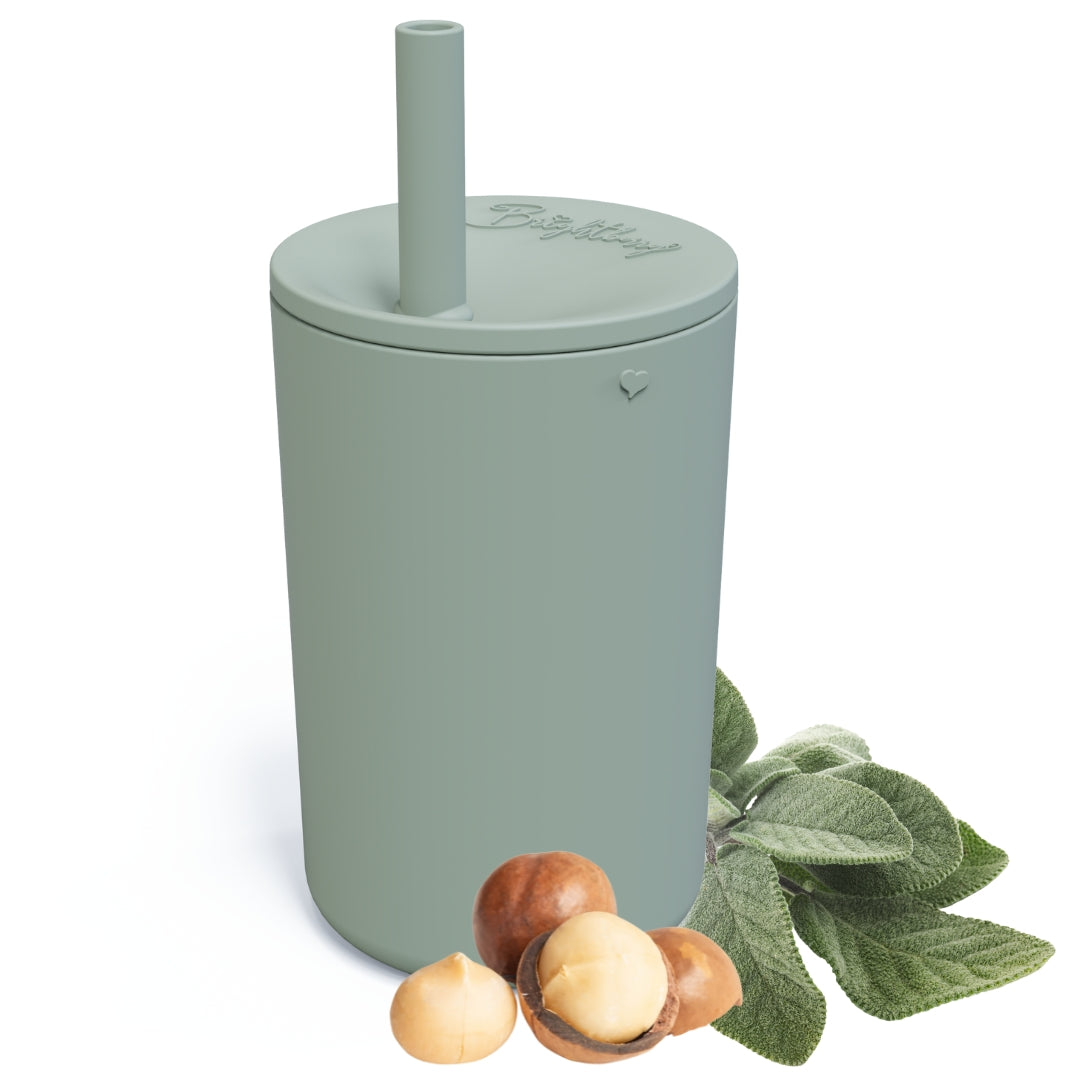
The small round section is designed to fit the Brightberry Kids Smoothie Cup, so the cup sits inside the plate rather than taking up separate table space. For families using both, it keeps the whole meal in one place and makes it easier for toddlers to manage independently.
It works just as well as a dinner plate as it does a snack plate. For dinner, fill the sections with pasta, meat, and vegetables. For an afternoon snack, add a smoothie to the cup, some fruit, and a few crackers, and the whole afternoon is sorted on one plate.
Winner of the Australian Good Design Award 2022.

Shop the Brightberry Divided Plate →
Divided plate vs easy scooping plate: which one?
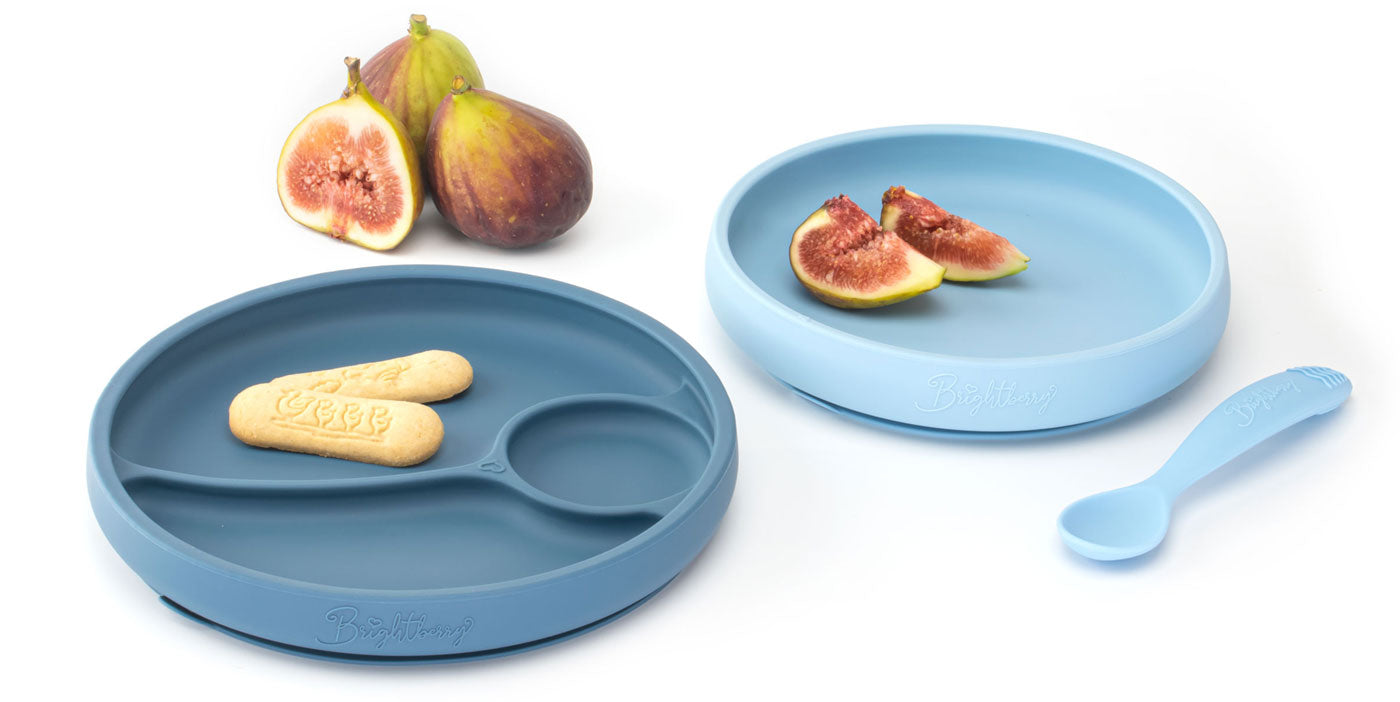
Brightberry makes two silicone suction plates. Here's how to choose:
Divided Suction Plate: three sections, keeps foods separate, and the small round section fits the smoothie cup. Best for toddlers who prefer foods apart, or when serving three different foods.
Easy Scooping Plate: one open section with high inward-curved walls that guide food back onto the spoon instead of letting it escape over the edge. Best for younger babies starting solids, or meals like pasta, rice, and stews where separation is not needed.
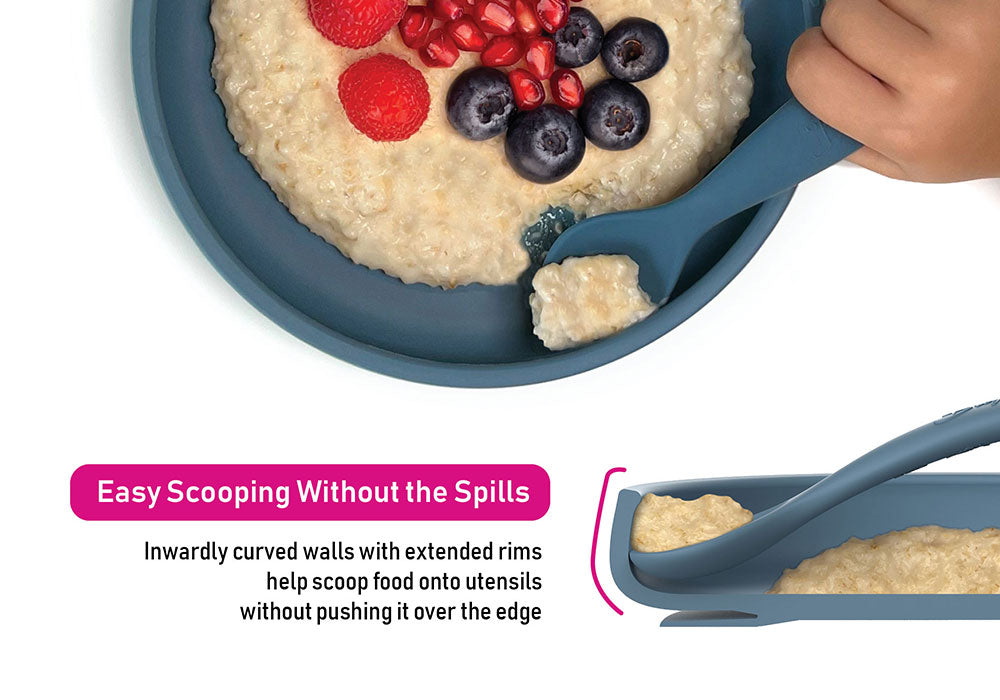
Many families use both: the divided plate for meals and snacks where variety matters, and the easy scooping plate for mixed meals like pasta, rice, or stew, where separation is not needed.
When to stop using a divided plate
There's no set age. Most children move away from divided plates naturally as they become more comfortable with mixed foods and more confident at the table. But that can happen anywhere from age 3 to well into primary school, particularly for children with sensory sensitivities.
The plate itself doesn't have an expiry date. Plenty of older kids still use a divided plate for afternoon snacks or breakfast: pancakes, some berries, and yoghurt for dipping in three sections is a practical setup at any age. If it's making mealtimes easier, there's no reason to stop.

Frequently asked questions
Are divided plates good for toddlers?
Yes. Divided plates help toddlers distinguish between different foods, make self-feeding easier, and reduce anxiety for children who don't like foods touching.
Do divided plates cause picky eating?
No. Research consistently shows picky eating is driven by sensory sensitivity, developmental stage, and genetics — not the plate.
At what age do you use a divided plate?
From around 6 months when starting solids. Most children use them through toddlerhood and some well into primary school, particularly for snacks and breakfast.
Are silicone plates better than stainless steel for toddlers?
For most families, yes. Silicone is microwave safe, lighter, softer on teeth and gums, and silent at the table: no scraping or banging sound when a toddler uses a metal spoon.
When should I stop using a suction plate?
There's no set rule. Most people think suction plates are only for the throwing and sliding phase, but the suction base also keeps the plate steady while scooping, which makes self-feeding easier at any age. Plenty of families use them long past toddlerhood for exactly that reason. If it's working, there's no reason to stop.
What is the difference between the Brightberry Divided Plate and the Easy Scooping Plate?
The Divided Plate has three separate sections and is best when serving different foods. The Easy Scooping Plate has one open section with high curved walls for easier scooping, best for mixed meals and younger babies.
Brightberry designs silicone feeding tools for babies and toddlers that support self-feeding and reduce mealtime stress. All products are made from LFGB platinum silicone and designed in Australia.